Renovation Rubbish Removal: Skip Bin Hire for Every Home Makeover
There is a moment in every renovation when the mess catches up with the vision. The old tiles are stacked in the hallway, the carpet is rolled up against the fence and the skip that seemed generous on paper is somehow already half full by lunchtime. Waste is one of the least glamorous parts of any home project, yet it is often the thing that determines whether a renovation stays on schedule or grinds to a halt. Arranging
residential skip bin hire on the Sunshine Coast before the first wall comes down makes the rest of the job considerably easier to manage.
Why Renovations Generate More Waste Than You Expect
Most homeowners underestimate how much material comes out of a renovation, particularly once demolition begins. A single bathroom strip-out can produce tiles, old plasterboard, timber battens and a cracked vanity before the plumber has even arrived. Add a kitchen reno or a couple of rooms of flooring and the volume adds up quickly.
Some of the common contributors include:
- Old fixtures and fittings removed during demolition
- Packaging waste from new materials and appliances
- Offcuts from timber, tiling and cabinetry work
- General site clean-up between trades
Having a skip bin on site from day one avoids the build-up of loose rubbish around the property, which also reduces trip hazards for tradespeople moving through the space.
What Can Go Into a Renovation Skip Bin
Renovation waste is generally classified as general waste or mixed heavy waste, depending on what is being disposed of. Understanding what fits the renovation waste removal brief helps avoid contamination fees and keeps the load compliant with local waste facility requirements.
Materials typically accepted in a renovation skip bin include:
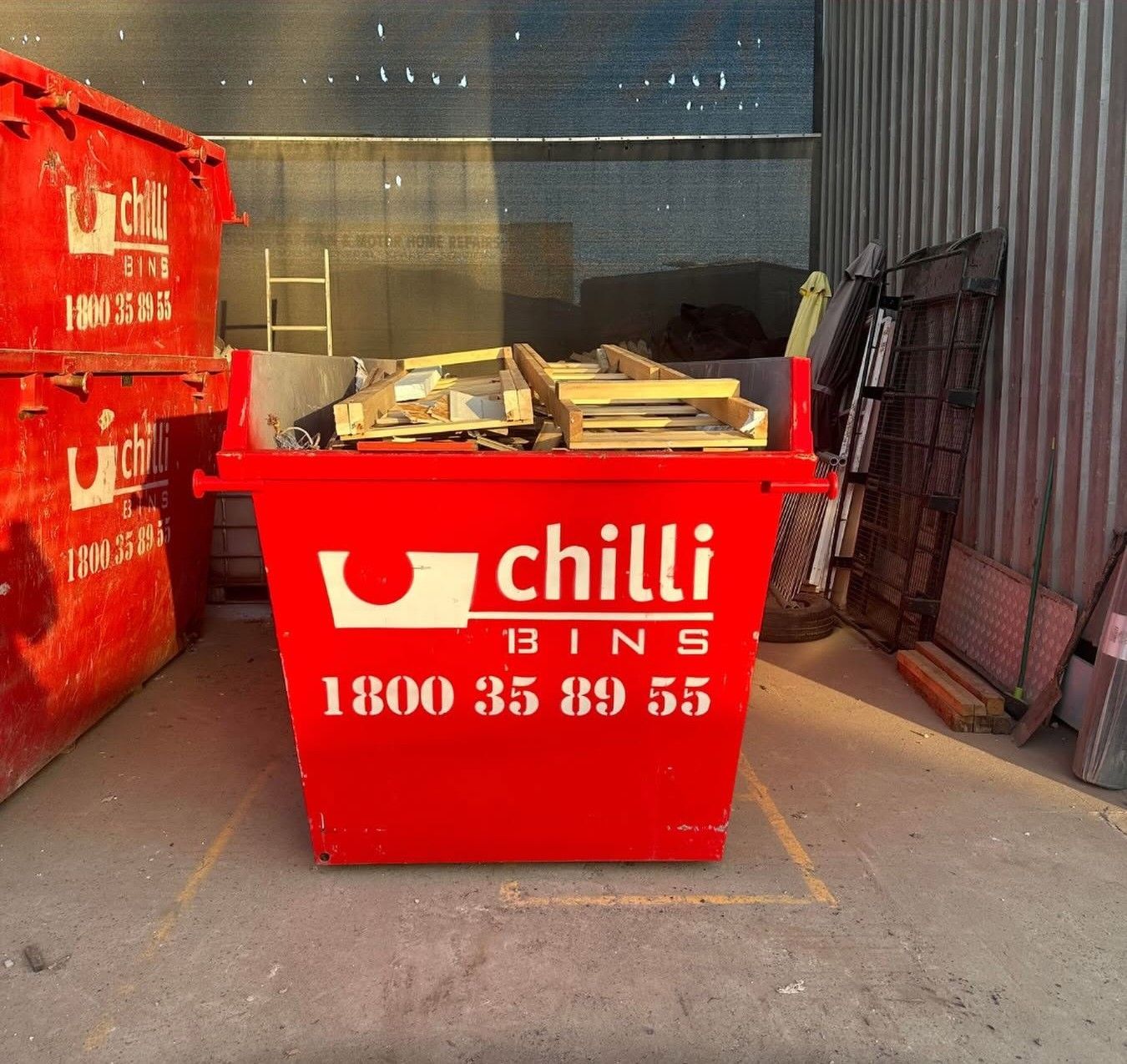
- Timber, including offcuts, skirting boards and old framing
- Plasterboard and gyprock
- Tiles, bricks and small amounts of concrete
- Carpet, underlay and vinyl flooring
- Metal fittings, pipework and hardware
- General household rubbish generated during the project
Mixing waste types is usually fine within a general or heavy mixed bin, but it helps to check with the provider before the bin arrives, particularly if the job involves larger volumes of concrete, soil or tiles, as these are often charged by weight rather than by bin size.
Choosing the Right Skip Bin Size for Your Project
Bin size is where most first-time renovators either overspend or run short. A bin that is too small means paying for a second collection, while an oversized bin takes up valuable driveway space and costs more than necessary.
A rough guide by project type:
- 2m³ to 3m³ – Small bathroom reno, garden clean-up or single-room declutter
- 4m³ to 6m³ – Kitchen renovation, flooring replacement or a full bathroom strip-out
- 8m³ to 10m³ – Multi-room renovations, structural changes or combined kitchen and bathroom projects
- 12m³ and above – Full home renovations, extensions or knock-down rebuild clean-ups
If there is any doubt, it is worth discussing the scope of the project with the skip bin provider directly. Photos of the space or a rough list of what is being removed usually gives enough information to recommend an appropriate size.
Skip Bin Hire on the Sunshine Coast for Bathroom and Kitchen Renovations
Bathroom and kitchen renovations tend to produce a mix of heavier materials such as tiles and cabinetry alongside lighter waste like packaging and old fittings. For homeowners arranging skip bin hire on the Sunshine Coast, this combination is common enough that most providers offer bins specifically suited to mixed heavy waste at this scale.
Driveway access and placement also matter more for these projects, since bathroom and kitchen renovations often run over several weeks with multiple trades coming and going. A bin positioned close to the work area, without blocking vehicle access, keeps the site functional throughout.
Managing Waste During a Full Home Renovation
Larger renovations rarely produce waste in one clean batch. Demolition happens first, followed by structural work, then fit-out, and each stage generates its own rubbish. For these projects, it often makes sense to plan for either a larger bin from the outset or a bin swap partway through.
Points worth considering for full home projects:
- Estimate waste volume by stage rather than for the whole job at once
- Ask about swap-and-return options if the renovation extends beyond a few weeks
- Keep clear access for the bin truck throughout the project, particularly if scaffolding or fencing is in place
- Separate any hazardous materials, such as asbestos-containing products, well before the bin is ordered
Asbestos in particular needs to be handled through a licensed removalist rather than placed in a standard skip bin, as most providers cannot legally accept it.
Benefits of Skip Bin Hire for Builders and Trades
For builders and tradespeople, on-site skip bins are as much about workflow as they are about disposal. A dedicated bin keeps the site tidier, which supports both safety and efficiency when multiple trades are working in the same space.
Practical benefits for builders include:
- Reduced downtime spent transporting waste to a tip
- Fewer safety hazards from loose materials underfoot
- Easier compliance with council and site waste requirements
- Predictable costs when bins are booked per stage of the build
For trades managing several jobs at once, having a reliable skip bin provider who can deliver and collect on short notice removes one more variable from an already tight schedule.
What You Cannot Put in a Skip Bin
Not everything from a renovation belongs in a general skip bin. Certain materials require separate handling due to safety or environmental regulations.
Items generally excluded include:
- Asbestos or asbestos-containing materials
- Liquid waste, paints and chemicals
- Batteries and gas bottles
- Tyres
- Food waste in large quantities
- Electrical appliances in some cases, depending on the provider
Checking this list before the bin arrives avoids delays or additional charges for contaminated loads, and most providers are happy to advise on alternative disposal options for these materials.
Booking and Delivery: What to Expect
Booking a skip bin is generally straightforward, though a few details make the process smoother. Confirming the delivery date, drop-off location and expected hire period upfront helps the provider plan the job around the rest of the renovation timeline.
Before delivery, it helps to:
- Clear the drop-off area of vehicles or obstructions
- Check whether council permits are needed if the bin will sit on the street
- Confirm collection timing in advance if the renovation has a firm deadline
- Ask about weight limits so the load stays within the agreed bin size
Most residential renovations do not need a council permit if the bin stays on private property, but this varies between councils, so it is worth a quick check beforehand.
Get Your Renovation Waste Sorted
We at Chilli Bins Skip Bins understand that renovation projects rarely go exactly to plan, which is why we work with homeowners and builders across the Sunshine Coast to match the right bin size to the job, whether that is a single bathroom update or a full home renovation.
If you are planning a renovation and need skip bin hire on the Sunshine Coast sorted before the demolition starts,
get in touch with our team to discuss your project and book a delivery time that suits your schedule.
Recent Posts